


To gauge the success of your SEO strategy, it’s crucial to track the right metrics that reflect how well your efforts are contributing to your website’s growth and visibility. SEO isn’t a static process; it’s an ongoing effort that requires consistent monitoring and tweaking to stay on top of ever-evolving algorithms and user behaviors. But which metrics should you focus on to truly understand whether your SEO strategy is effective? Here are the key metrics you should be tracking.
Organic Traffic
Organic traffic is the cornerstone of any successful SEO strategy. It represents the visitors who come to your website through search engine results, without any paid advertising. A rise in organic traffic typically indicates that your SEO efforts are working, especially if the traffic comes from your targeted keywords. Monitoring organic traffic gives you insight into how well your content is performing in search engines and how much visibility your website is gaining.
Google Analytics is an excellent tool to track organic traffic, allowing you to see the number of visitors coming from organic search and the specific pages they land on. This data helps you assess which content is resonating with users and which areas might need improvement.

Keyword Rankings
Another essential metric to track is keyword rankings. If you’re aiming to improve your website’s visibility, understanding how your pages rank for specific keywords is vital. Keywords are the foundation of SEO, and seeing where your content stands in search engine results pages (SERPs) for your targeted terms tells you how successful your optimization efforts are.
You can use tools like Google Search Console or third-party platforms such as SEMrush or Ahrefs to monitor your keyword rankings. Tracking rankings helps you stay on top of your SEO performance and adjust your strategy if certain keywords are underperforming or if new opportunities arise.
Click-Through Rate (CTR)
While organic traffic and rankings are important, click-through rate (CTR) reveals how effective your search result listings are in attracting clicks. CTR measures the percentage of people who click on your website’s link after seeing it in search results. A high CTR indicates that your page titles, meta descriptions, and overall search presence are compelling enough to encourage users to visit your site.
Google Search Console provides a comprehensive view of your CTR for various pages and keywords, helping you pinpoint areas where you can improve your listing’s appeal, such as crafting more engaging meta descriptions or optimizing your title tags.
Bounce Rate
Bounce rate, or the percentage of visitors who leave your site after viewing just one page, is another key metric. A high bounce rate could indicate that users are not finding what they expected or that your content is not engaging enough to keep them on your site. However, bounce rate should not be viewed in isolation—context matters. For instance, a blog post might have a high bounce rate but still be effective if the visitor came for a specific answer and found it immediately.
In Google Analytics, you can track bounce rate across different pages to understand which content keeps users engaged and which might need improvements in terms of relevance or user experience.
Conversion Rate
Ultimately, SEO isn’t just about traffic; it’s about driving meaningful actions on your site. Conversion rate measures how many visitors take a desired action, such as completing a purchase, filling out a form, or signing up for a newsletter. A strong conversion rate indicates that your site is not only attracting visitors but also persuading them to engage with your brand.
Tracking conversions in Google Analytics is straightforward, as you can set up specific goals to track various actions. If your organic traffic is increasing but conversions are low, it might be a sign that your content needs to be more relevant, or your calls to action need to be more compelling.
Page Load Speed
Page load speed is another important factor for both user experience and SEO. Websites that load slowly tend to have higher bounce rates and lower user engagement, both of which negatively impact SEO rankings. Google has made it clear that page speed is a ranking factor, and sites with fast loading times tend to perform better in search results.
To track your site’s speed, use tools like Google’s PageSpeed Insights. It provides insights into your website’s loading time and offers suggestions for improving it, such as optimizing images or enabling browser caching.
Backlinks
Backlinks are an essential part of SEO as they are one of the key indicators of your website’s authority. When other reputable websites link to your pages, it signals to search engines that your content is valuable and trustworthy. A strong backlink profile can significantly improve your rankings and increase organic traffic.
Tracking your backlinks using tools like Ahrefs or Moz can help you see how many quality backlinks your site is earning and from which sources. A diverse and authoritative backlink profile can greatly improve your chances of ranking higher in search engine results.
Domain Authority
Domain authority (DA) is a metric developed by Moz that predicts how well a website will rank based on various factors like backlinks, on-page SEO, and site structure. While DA is not a direct ranking factor, it serves as a good indicator of your website’s overall strength and potential to rank in search engines.
Monitoring DA over time can give you an overall sense of your site’s SEO health. If your DA is steadily increasing, it indicates that your SEO efforts are paying off and that your website is becoming a more trusted source in your industry.
Pages per Session
Pages per session is a metric that tracks how many pages a user views during a single session on your site. A higher pages-per-session rate generally indicates that users are engaging with multiple pieces of content, which is a good sign for SEO. It suggests that your website is providing valuable and relevant information to users, encouraging them to explore more pages.
You can track pages per session in Google Analytics under the “Audience” section. If your pages per session are low, it could be a sign that your content isn’t engaging enough, or your internal linking strategy needs improvement.
Mobile Usability
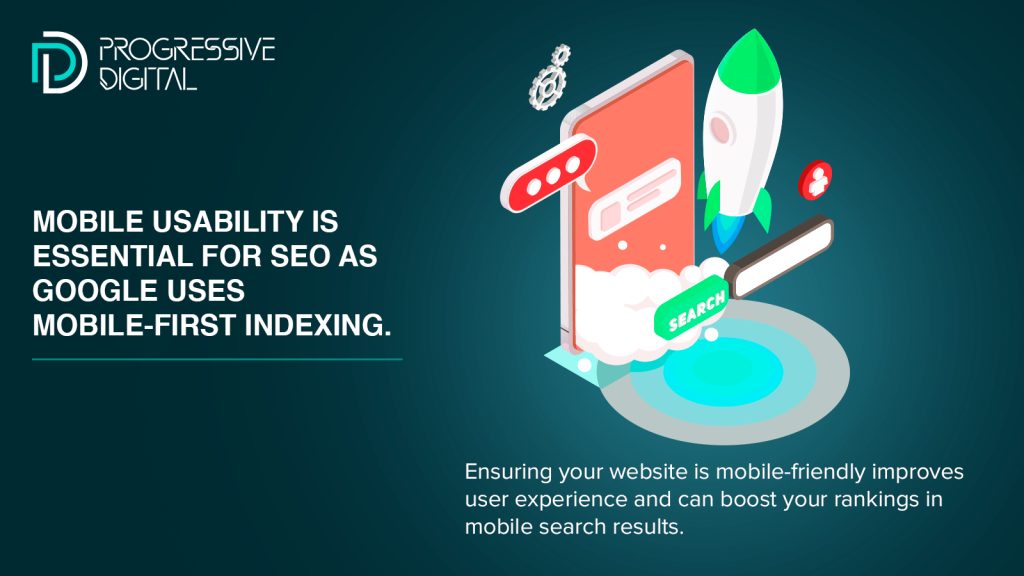
Lastly, mobile usability is crucial for SEO. With more people accessing the web on mobile devices, ensuring that your website is mobile-friendly is essential. Google uses mobile-first indexing, meaning it ranks websites based on their mobile versions rather than their desktop versions.
Google Search Console provides a mobile usability report that can highlight any issues with your site’s mobile experience. If your website isn’t mobile-friendly, it could harm your rankings and user engagement.

Tracking the right SEO metrics is essential for understanding the effectiveness of your strategy and ensuring that your efforts are moving you toward your business goals. By monitoring key metrics such as organic traffic, keyword rankings, CTR, conversion rate, and page load speed, you can make informed decisions that will help optimize your website’s performance. SEO is an ongoing process, and regularly reviewing and adjusting your strategy based on these metrics will ensure long-term success in search engine rankings.