


There’s a quiet moment in almost every business where the owner looks at the analytics and thinks: we need more traffic. More ads, more reach, more impressions. The logic feels obvious. If more people arrive, more people will buy. So budgets go up, creatives change, agencies get replaced, and dashboards become busier.
Yet the numbers barely move.
Not because the marketing is weak, but because the journey is broken.
Customer Journey Mapping isn’t really about drawing funnels or diagrams. It’s about understanding the experience a real person has while moving from curiosity to trust. Most brands don’t actually know that experience. They know what they intend to communicate, not what the customer actually feels. And conversions live in that gap.
How People Actually Experience Your Brand
A visitor doesn’t arrive on your website thinking about your service categories or internal processes. They arrive with a question in their head. Sometimes it’s practical. Sometimes it’s emotional. Sometimes it’s vague.
The moment they land, they begin testing whether your world makes sense to them.
They scan, not read.
They compare, not evaluate.
They look for signals that this place understands their situation without making them work for it.
If they have to think too hard, they leave.
The biggest misconception in marketing is believing people decide based on information. In reality, they decide based on clarity. Information helps justify a choice, but clarity creates the choice. A journey map reveals exactly where clarity disappears.
Imagine a potential client who hears about you from a friend, searches your name, opens your website, scrolls your services, checks your Instagram, returns to the site, and only then considers contacting you. From the company’s perspective, this is five separate channels. From the human perspective, it’s one continuous experience.
If the tone changes, the promise shifts, or the effort required increases, trust drops. The user doesn’t consciously think “inconsistent messaging.” They simply feel uncertainty — and uncertainty quietly kills conversion.

Friction: The Real Conversion Killer
Mapping the journey forces you to watch the process from the outside. Not as a marketer, but as someone who doesn’t know you yet. Where does curiosity appear? Where does doubt appear? Where does mental effort spike?
Every spike is friction.
And friction is the true enemy of conversion rates.
Most businesses try to optimize decisions. The better approach is to optimize momentum.
Momentum is what carries a person from one step to the next without reconsidering the previous step. A clear ad leads to a predictable landing page. The landing page answers the exact question that brought them there. The next action feels like a continuation, not a commitment.
Good journeys feel inevitable.
Bad ones feel like negotiations.
When you map the journey properly, you start seeing strange things. Pages that look good but interrupt the flow. CTAs that are visible but premature. Content that explains everything yet reassures nothing. Many conversion problems are timing problems — you asked for action before reducing risk.
Why People Hesitate Before Contacting You
A classic example is the contact form. Companies often treat it as a finish line. From the user’s perspective, it’s a risk event. Submitting information creates uncertainty about what happens next. Will they get a call immediately? A pushy sales pitch? Silence?
A journey map highlights whether you prepared them for that moment or simply demanded trust.
The highest converting brands rarely push harder. They make the next step feel safe. They preview the process. They answer the question after the click before it exists. That anticipation is what removes hesitation.
The Emotional Side of Conversion
Customer Journey Mapping also exposes emotional transitions. The early stage is curiosity. The middle stage is evaluation. The final stage is vulnerability.
People don’t convert when convinced.
They convert when comfortable.
If your messaging stays rational while their mindset becomes emotional, you lose them right before the decision.
This is why testimonials work better near action points than near introductions. Early on, users want orientation. Later, they want reassurance. Same content, different timing, dramatically different impact. Mapping helps place information where it matches the psychological state, not just the logical order.
Invisible Drop-Off Points
One of the most powerful outcomes of mapping is discovering invisible drop-offs. Analytics shows where people leave. It doesn’t show why. When you replay the journey as a human narrative, you notice subtle breaks in expectation.
A headline promising simplicity followed by a dense explanation.
A friendly social presence leading to a formal corporate page.
A quick promise followed by a long process.
Each mismatch forces the brain to reevaluate. Reevaluation pauses momentum, and pauses reduce conversion probability more than almost anything else.
Higher conversion rates rarely come from persuasion.
They come from reducing moments of reconsideration.
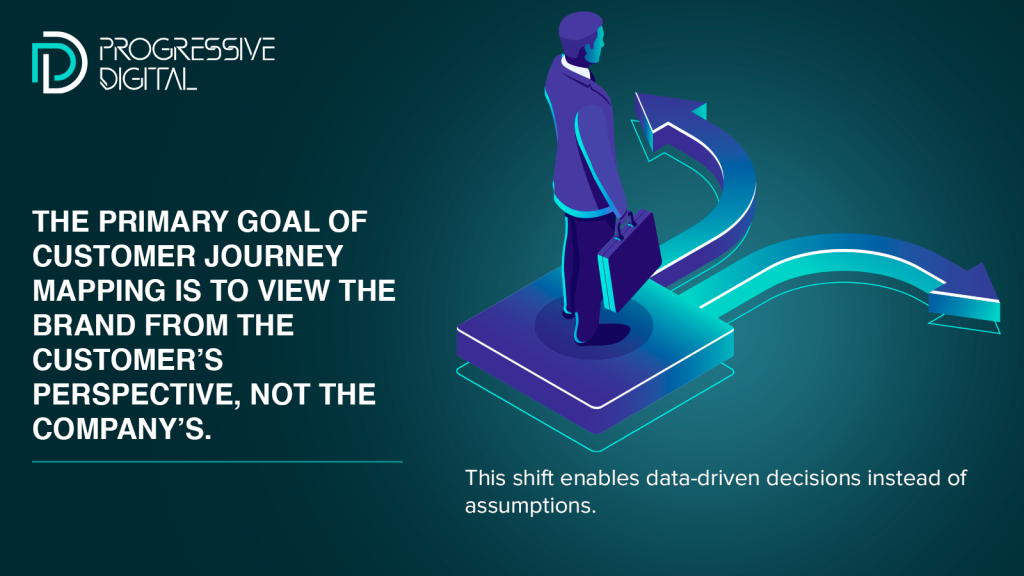
When the Brand Feels Predictable, Trust Appears
A well-designed journey feels like the brand already knows what the customer is about to ask. That predictive quality builds authority more effectively than credentials. People trust what feels prepared. They distrust what feels reactive.
Journey mapping also changes how teams work internally. Marketing, sales, and support often operate as separate stages, but customers don’t experience them separately. A delayed reply after a great first impression destroys more value than a weak ad ever could.
Once a company sees the entire path on one timeline, optimization shifts from isolated improvements to coordinated experience design.
More Traffic Becomes More Valuable
Another interesting shift happens in content strategy. Instead of creating more content, companies start removing it. Not everything that informs helps conversion. Some information answers questions no one asked yet, creating cognitive overload.
Clarity improves when each step has a single purpose. The map shows which message belongs where and which one doesn’t belong at all.
As friction decreases, something unexpected happens: traffic becomes more valuable. The same number of visitors produces more clients because fewer moments break their confidence. Businesses often chase reach before earning efficiency. Journey mapping flips that order.
Fix the experience first, then scale attention.
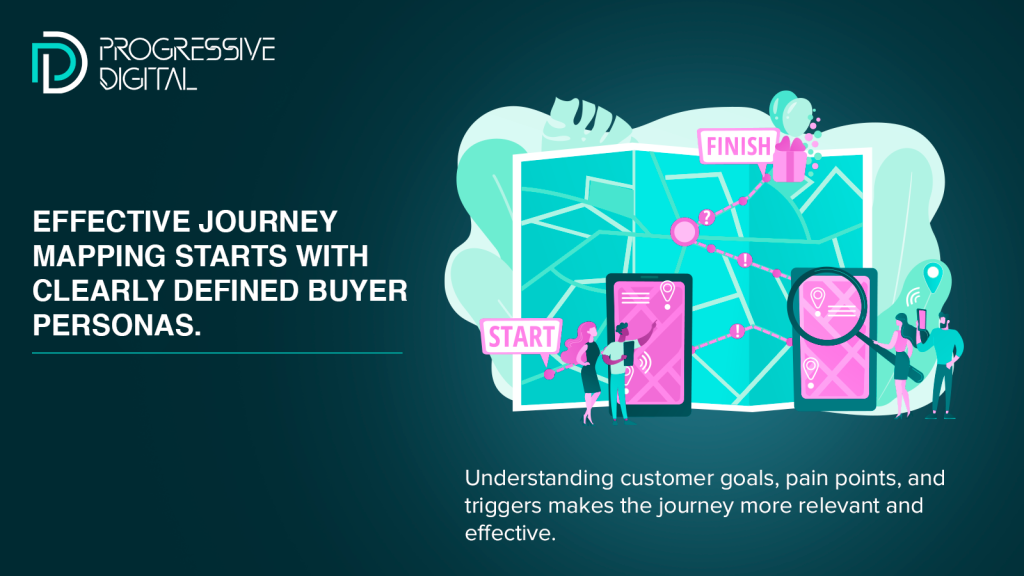
Conversion Is the Result of Coherence
In practice, a good journey map isn’t a static document. It’s a behavioral hypothesis. You assume what the person feels at each stage, then validate through observation, recordings, conversations, and patterns in questions.
Over time, the map becomes less theoretical and more predictive. You can anticipate objections before they appear and design around them.
The real power of Customer Journey Mapping is that it moves marketing away from tactics and toward empathy. Not empathy as a slogan, but as operational understanding. You stop asking how to convince and start asking how to guide.
Conversion is not a moment.
It’s the natural end of a sequence that felt consistent from the first impression to the final action.
Higher conversion rates are simply the byproduct of a journey that never forced the customer to rethink their decision.