


The world is moving at an unprecedented pace, and businesses that fail to adapt to digital transformation risk being left behind. Whether you’re a small startup or an established enterprise, leveraging digital tools, automation, and data-driven strategies is no longer optional—it’s the key to staying competitive, enhancing efficiency, and driving growth.
At Progressive Digital, we help businesses embrace digital transformation, ensuring they don’t just keep up but lead their industries. Let’s explore how digital transformation is reshaping industries and why your business needs to evolve now.
What is Digital Transformation?
Digital transformation isn’t just about upgrading technology—it’s about fundamentally changing how businesses operate, deliver value, and engage with customers. It involves:
• Automating workflows to improve efficiency
• Leveraging data analytics for better decision-making
• Enhancing customer experiences through digital tools
• Integrating AI and automation to optimize operations
Successful digital transformation goes beyond adopting new tools—it’s about redefining business strategies to stay ahead.
Why Digital Transformation is Essential for Industry Leaders
Businesses that resist digital transformation often struggle with inefficiencies, lost revenue, and declining customer engagement. Here’s why leading industries are prioritizing digital adoption:
1. Competitive Advantage
Companies that embrace digital transformation outperform competitors who stick to outdated processes. Digital-first businesses:
- Move faster and adapt to market trends
- Offer seamless online experiences
- Automate processes, reducing operational costs
2. Enhanced Customer Experience
Customers today expect fast, personalized, and seamless interactions with brands. Digital transformation allows businesses to:
- Utilize AI-powered chatbots for instant support
- Offer self-service options and mobile-friendly platforms
- Use customer data to personalize marketing strategies
3. Increased Efficiency & Productivity
Automating repetitive tasks frees up employees to focus on high-value work. From automated invoicing to smart CRM systems, digital tools:
- Reduce human errors
- Streamline communication and project management
- Improve collaboration across teams
4. Data-Driven Decision Making
Modern businesses thrive on data insights. Digital transformation enables:
- Real-time analytics to track customer behavior
- AI-driven forecasting for better planning
- Data integration across platforms for a holistic view of business performance
5. Future-Proofing Against Disruption
- Technology is constantly evolving. Businesses that fail to adapt risk becoming irrelevant. Digital transformation ensures:Adaptability to new market trends
- Resilience against economic shifts
- Scalability for future growth
Key Areas of Digital Transformation
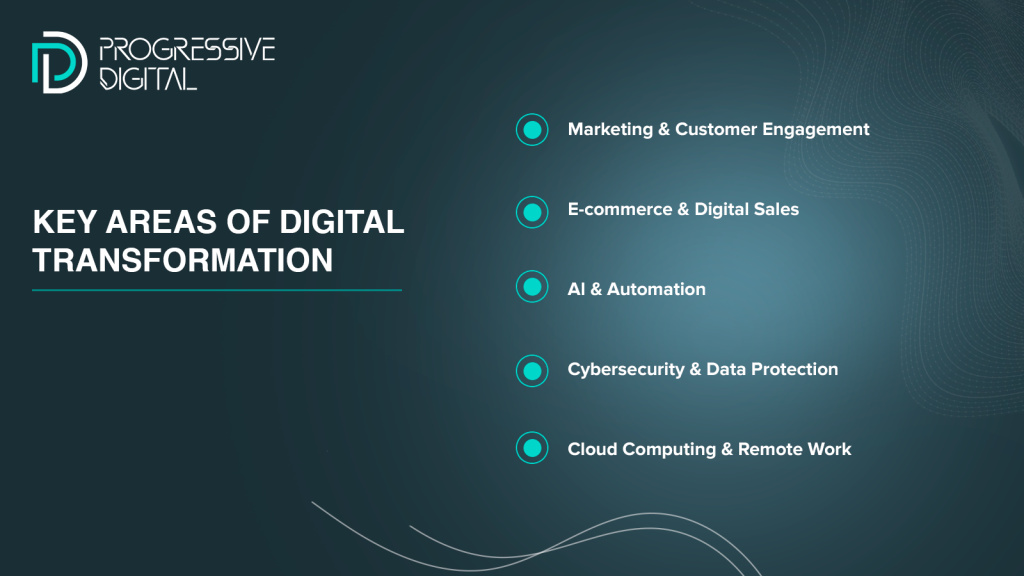
1. Marketing & Customer Engagement
Traditional marketing no longer works in an era where digital-first engagement dominates. Companies investing in:
✔ Social media marketing & paid advertising
✔ Email automation & personalized content
✔ SEO & data-driven content strategies
…are the ones leading their industries.
2. E-commerce & Digital Sales
With online shopping growing rapidly, businesses must optimize digital sales strategies. This includes:
- Mobile-friendly websites & seamless checkout experiences
- AI-driven recommendations to personalize shopping
- Integration of multiple payment options for convenience
3. AI & Automation
Artificial intelligence is revolutionizing industries. Companies that adopt AI-powered solutions see:
- Faster response times & customer support automation
- Predictive analytics for smarter business decisions
- Cost savings through optimized workflows
4. Cybersecurity & Data Protection
As businesses become more digital, cybersecurity threats are on the rise. Digital transformation includes:
- Advanced encryption & secure data storage
- Multi-factor authentication for security
- Compliance with global data regulations
5. Cloud Computing & Remote Work
The shift to cloud-based platforms has made remote work seamless and efficient. Businesses using:
- Cloud storage for easy file access
- Collaborative tools like Slack & Microsoft Teams
- Remote work strategies for global expansion
…are thriving in the modern landscape.
How to Lead Your Industry Through Digital Transformation
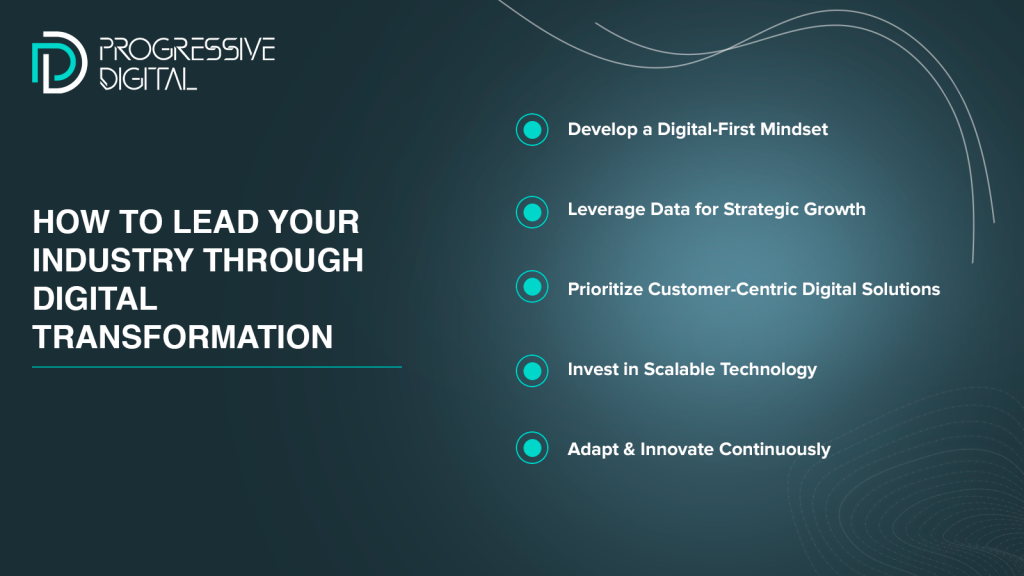
1. Develop a Digital-First Mindset
Transformation starts at the leadership level. Businesses need to:
- Foster a culture of continuous learning
- Invest in employee digital upskilling
- Stay informed on emerging technologies
2. Leverage Data for Strategic Growth
Businesses that use data analytics outperform those that rely on guesswork. To stay ahead:
- Track KPIs & customer insights
- Utilize AI-driven business intelligence tools
- Make data-backed decisions to optimize strategies
3. Prioritize Customer-Centric Digital Solutions
Consumers expect seamless, tech-driven experiences. Businesses must:
- Optimize websites for mobile users
- Implement AI chatbots for 24/7 customer support
- Personalize marketing based on customer behavior
4. Invest in Scalable Technology
Adopting the right technology ensures long-term success. Companies should:
- Choose cloud-based solutions for scalability
- Automate repetitive tasks to improve productivity
- Integrate digital tools into every business function
5. Adapt & Innovate Continuously
Technology doesn’t stand still, and neither should your business. Leaders who continuously:
- Monitor industry trends
- Experiment with new marketing & operational strategies
- Stay flexible in adopting cutting-edge tech
…are the ones who will lead their industries.
The Future is Digital—Are You Ready?
Digital transformation is no longer a choice—it’s a necessity. The businesses that embrace change, innovate, and adopt digital-first strategies will outperform competitors, maximize efficiency, and future-proof their success.
Is your business ready to lead its industry? Let’s make digital transformation work for you. Contact Progressive Digital today!