


In the evolving landscape of digital marketing, data has become the cornerstone of successful strategies. Among the wealth of information available, behavioral data stands out as a powerful tool to refine campaigns, enhance customer experience, and boost ROI. By understanding how consumers interact with your brand, you can create more targeted and effective marketing efforts.
What is Behavioral Data?

Behavioral data refers to the information collected about a user’s interactions with your brand. This includes actions like:
• Pages visited on your website.
• Products added to a cart but not purchased.
• Time spent on specific content.
• Engagement on social media posts.
Unlike demographic data, which tells you who your audience is, behavioral data reveals what they do. This actionable insight allows marketers to go beyond assumptions and make decisions rooted in actual user behavior.
Why Behavioral Data Matters in Digital Marketing

Behavioral data bridges the gap between generic strategies and hyper-personalized marketing. Here’s why it’s invaluable:
1. Personalization at Scale
One-size-fits-all marketing is no longer effective in today’s competitive landscape. Behavioral data allows brands to segment their audience based on actions and preferences.
Example: An e-commerce site can use browsing data to recommend products similar to those a user has already viewed, increasing the likelihood of conversion.
2. Improved Customer Experience
When marketing aligns with a user’s specific needs and behaviors, the customer experience becomes seamless and intuitive. Behavioral data enables you to anticipate your audience’s next steps, reducing friction and building trust.
3. Enhanced Campaign Performance
Behavioral insights help marketers optimize campaigns by focusing resources on strategies that drive results. For instance, understanding which content formats your audience engages with the most can inform future creative decisions.
4. Predictive Marketing Opportunities
By analyzing patterns in behavioral data, marketers can predict future actions, such as when a customer might churn or make a purchase. This allows brands to intervene at the right moment with tailored messaging.
How to Leverage Behavioral Data

Effectively using behavioral data in digital marketing requires a thoughtful approach. Here’s how you can make the most of it:
1. Segment Your Audience
Behavioral data enables you to group your audience based on specific actions or engagement levels. For example:
• Engaged Users: Visitors who frequently interact with your content.
• Cart Abandoners: Users who add items to their cart but don’t complete the purchase.
• Infrequent Visitors: Those who visit sporadically without consistent behavior.
By creating targeted campaigns for each segment, you can address their unique needs and motivations.
2. Optimize Retargeting Campaigns
Behavioral data is a goldmine for retargeting. Use it to serve highly relevant ads to users who have already interacted with your brand.
Example: A travel company can retarget users who searched for flights to a specific destination with ads promoting hotel deals in the same location.
3. Design Personalized Email Campaigns
Email marketing remains one of the most effective channels, and behavioral data makes it even more powerful.
Personalization Tactics:
• Send abandoned cart emails with product images.
• Recommend articles or blog posts based on previously read content.
• Offer discounts on products a customer has browsed multiple times.
4. Create Dynamic Content
Dynamic content adapts to the user’s behavior, making every interaction feel tailored. Behavioral data can inform the design of personalized landing pages, homepage banners, or product recommendations.
Example: A music streaming service might show playlists based on a user’s listening history, increasing engagement.
5. Leverage Behavioral Triggers
Behavioral triggers are automated actions based on user behavior. Examples include:
• Sending a follow-up email when a customer views a product but doesn’t purchase.
• Offering a discount after a certain amount of time spent browsing.
• Triggering a chatbot to offer help when a user hesitates on a checkout page.
Challenges of Using Behavioral Data

While behavioral data offers immense potential, there are challenges to address:
1. Data Privacy and Compliance
Collecting and using behavioral data must comply with regulations like GDPR and CCPA. Transparency about data collection and offering opt-outs are crucial for maintaining trust.
2. Data Silos
Behavioral data often resides in different tools and platforms. Integrating these data sources into a unified system ensures a comprehensive view of your audience.
3. Over-Personalization Risks
While personalization enhances user experience, overdoing it can feel intrusive. Striking the right balance between relevance and privacy is essential.
Behavioral Data and AI
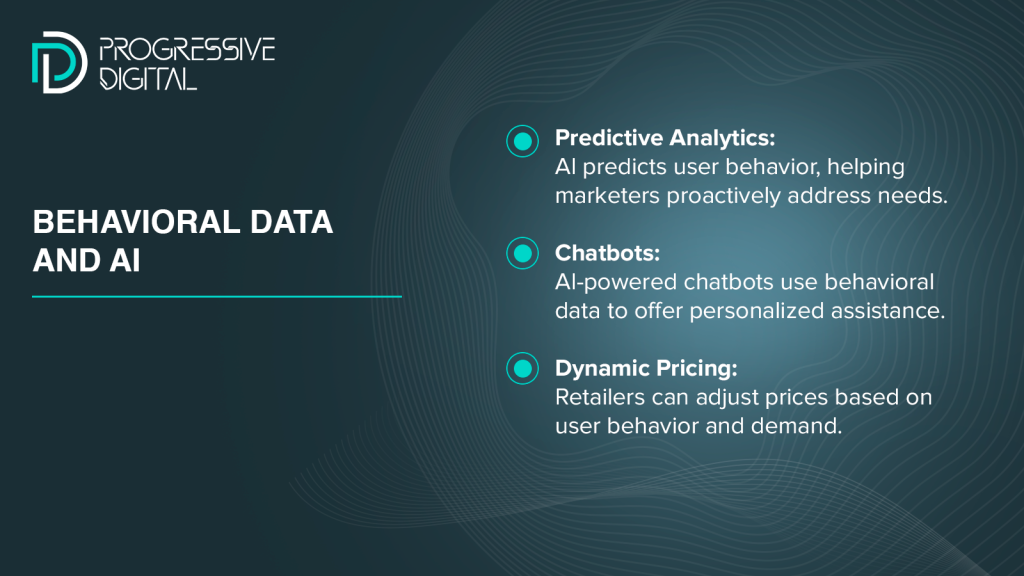
Artificial intelligence (AI) has revolutionized how marketers leverage behavioral data. AI-powered tools can analyze vast datasets, identify patterns, and make real-time recommendations.
Use Cases of AI and Behavioral Data
1. Predictive Analytics: AI predicts user behavior, helping marketers proactively address needs.
2. Chatbots: AI-powered chatbots use behavioral data to offer personalized assistance.
3. Dynamic Pricing: Retailers can adjust prices based on user behavior and demand.
Example: A subscription service might use AI to predict when a customer is likely to cancel and proactively offer a retention incentive.
Measuring Success with Behavioral Data
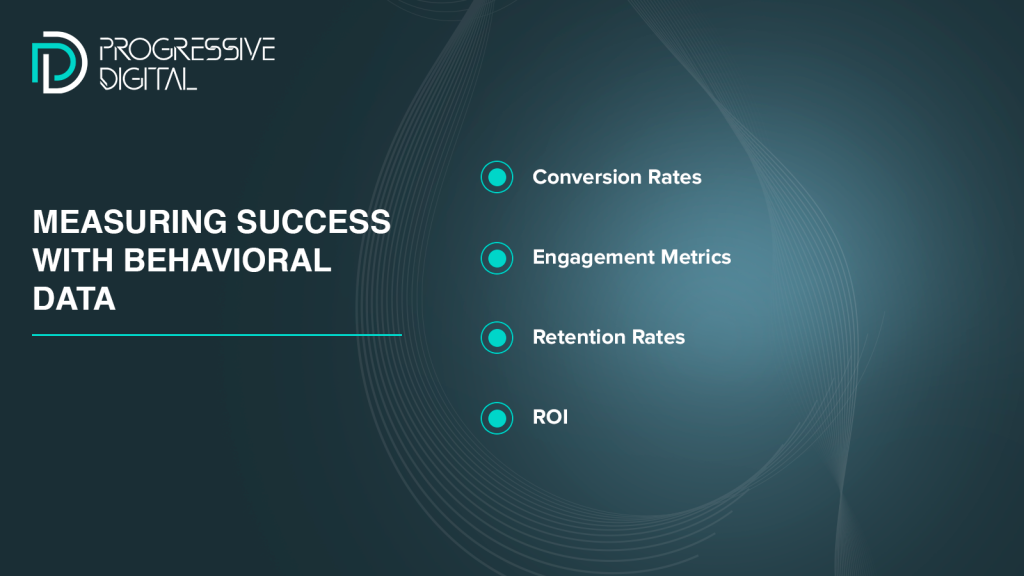
To ensure your behavioral data strategies are effective, track the right metrics:
• Conversion Rates: Measure how many users take the desired action after interacting with personalized content.
• Engagement Metrics: Monitor time spent on site, pages per session, and bounce rates.
• Retention Rates: Evaluate whether personalized efforts lead to repeat visits or purchases.
• ROI: Calculate the return on investment for campaigns driven by behavioral data.
The Future of Behavioral Data in Digital Marketing

As technology advances, the role of behavioral data in digital marketing will only grow. Future innovations may include:
• Real-Time Personalization: Content that adapts dynamically as users navigate your site.
• Voice Search Optimization: Behavioral data will help brands understand how users interact with voice-enabled devices.
• Enhanced Predictive Analytics: AI tools will become even better at forecasting user needs and behaviors.
Behavioral data is transforming digital marketing, allowing brands to connect with their audience on a deeper, more personalized level. By leveraging this powerful tool, marketers can create smarter strategies that drive engagement, improve customer experiences, and ultimately, boost business outcomes.
With the right approach, tools, and insights, your brand can harness behavioral data to stay ahead in the ever-evolving digital landscape.