

Picture this: you’re scrolling through your favorite social media platform, and an ad pops up—not just any ad, but one that feels as if it was tailor-made for you. It’s relevant, timely, and oddly specific. This isn’t a coincidence; it’s the future of marketing in action. At Progressive Digital, we believe that staying ahead in this ever-evolving digital landscape is not just about technology but about understanding the human connection that drives it all.
So, what’s next for marketing? Let’s dive into the trends shaping the future, and how businesses can adapt to create meaningful, impactful campaigns.
1. AI and Marketing: The Algorithm as Your Best Ally
Artificial Intelligence is no longer a futuristic concept—it’s at the core of modern marketing. From predictive analytics to automated customer interactions, AI is becoming an indispensable tool for brands.
How AI Transforms Marketing
• Hyper-Personalized Content: AI doesn’t just analyze behavior; it predicts it. Imagine crafting emails or ads so personalized they feel like one-on-one conversations.
• Automation That Works for You: Tools like chatbots can manage customer inquiries 24/7, freeing up your team for strategic planning.
• Real-Time Decision Making: AI-driven insights allow marketers to adjust campaigns in real time, maximizing ROI.
Example: Netflix uses AI to recommend shows based on your watch history. Imagine applying that level of personalization to your marketing strategy—delivering the right message to the right person at the right time.
2. Voice Search:A Shift in Seo
“Hey Siri, what’s the best coffee shop near me?” This kind of search is becoming the norm as voice-activated devices gain popularity. Brands must optimize for this conversational style of search to remain visible.
Adapting to Voice Search Trends:
• Use Natural Language Keywords: Optimize content with phrases that mimic everyday speech.
• Focus on Local SEO: Many voice searches are location-based, so ensure your business is optimized for local queries.
• Optimize for Featured Snippets: These are often used by voice assistants to answer questions directly.
Stat to Watch: By 2024, voice searches are expected to account for over half of all online searches.
3. Social Commerce: The Shop is Open 24/7
Scrolling Instagram, you see a sleek pair of sneakers. Within seconds, you’ve clicked, purchased, and received a confirmation email—all without leaving the app. That’s social commerce at work.
Why Social Commerce is Taking Over
• Seamless Shopping: Platforms like Instagram and TikTok now allow users to shop directly through posts and videos.
• Boosted Impulse Buys: The ease of purchase reduces friction, making it easier for customers to commit.
• Data Goldmine: These platforms provide insights into what your audience loves, helping you refine your product offerings.
Pro Tip: Use shoppable posts and videos to showcase your products in action. Think behind-the-scenes videos, user-generated content, or influencer collaborations to build trust and drive sales.
4. Interactive Content: Let Your Audience Take the Lead
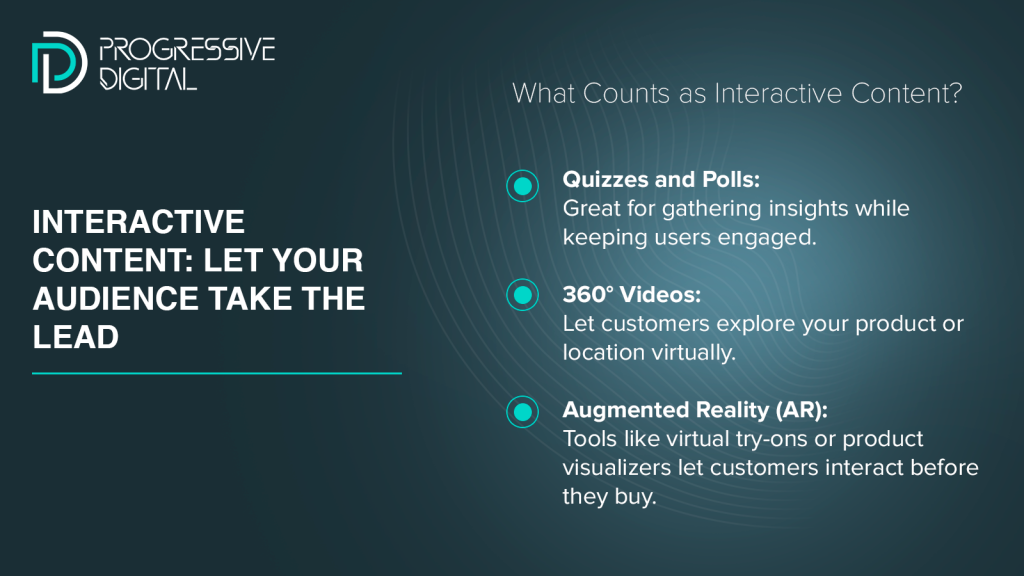
People don’t just want to watch—they want to engage. Interactive content is transforming how brands communicate with their audience, making it a two-way street.
What Counts as Interactive Content?
• Quizzes and Polls: Great for gathering insights while keeping users engaged.
• 360° Videos: Let customers explore your product or location virtually.
• Augmented Reality (AR): Tools like virtual try-ons or product visualizers let customers interact before they buy.
Example: Sephora’s AR makeup tool lets users see how a lipstick shade will look on their face before purchasing. This kind of engagement builds trust and reduces purchase hesitation.
5. Sustainability as a Selling Point
Marketing is no longer just about what you’re selling; it’s about what you stand for.
Consumers increasingly want to know if the brands they support are doing their part for the planet.
Incorporating Sustainability Into Your Marketing
• Transparent Practices: Showcase your eco-friendly efforts, whether it’s reducing waste, sourcing sustainably, or using renewable energy.
• Storytelling Matters: Use videos or blogs to tell your sustainability story authentically.
• Green Products: Highlight products that align with your audience’s values.
Stat to Know: A Nielsen study found that 73% of global consumers would change their consumption habits to reduce environmental impact.
6. Micro-Influencers: Authenticity Over Reach
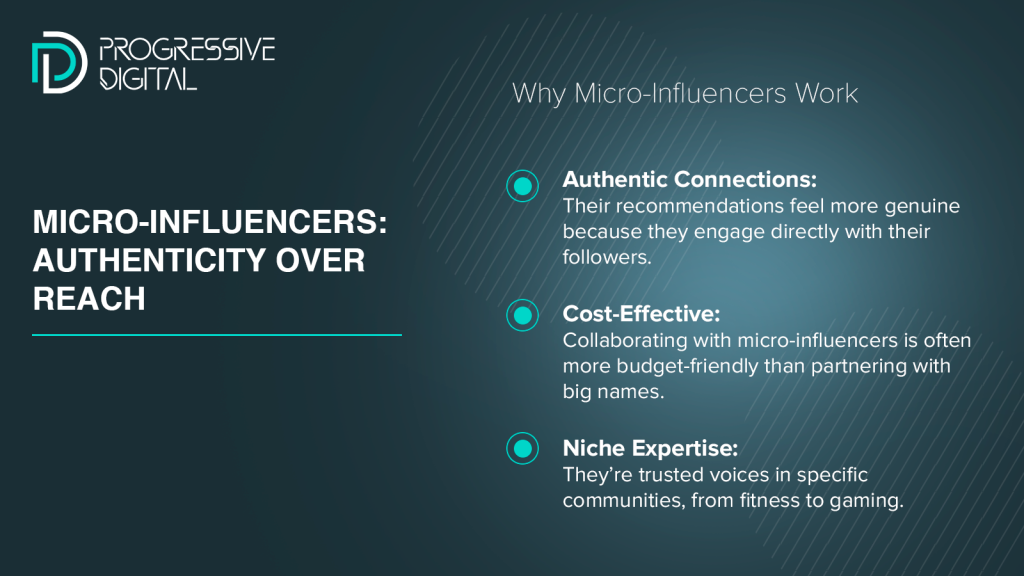
Gone are the days when only mega-celebrities could sway public opinion. Micro-influencers, with their smaller but highly engaged audiences, are the new kings and queens of social media.
Why Micro-Influencers Work
• Authentic Connections: Their recommendations feel more genuine because they engage directly with their followers.
• Cost-Effective: Collaborating with micro-influencers is often more budget-friendly than partnering with big names.
• Niche Expertise: They’re trusted voices in specific communities, from fitness to gaming.
Pro Tip: Partner with multiple micro-influencers to amplify your reach while maintaining authenticity.
7. Data Privacy: Marketing in a Cookieless Future
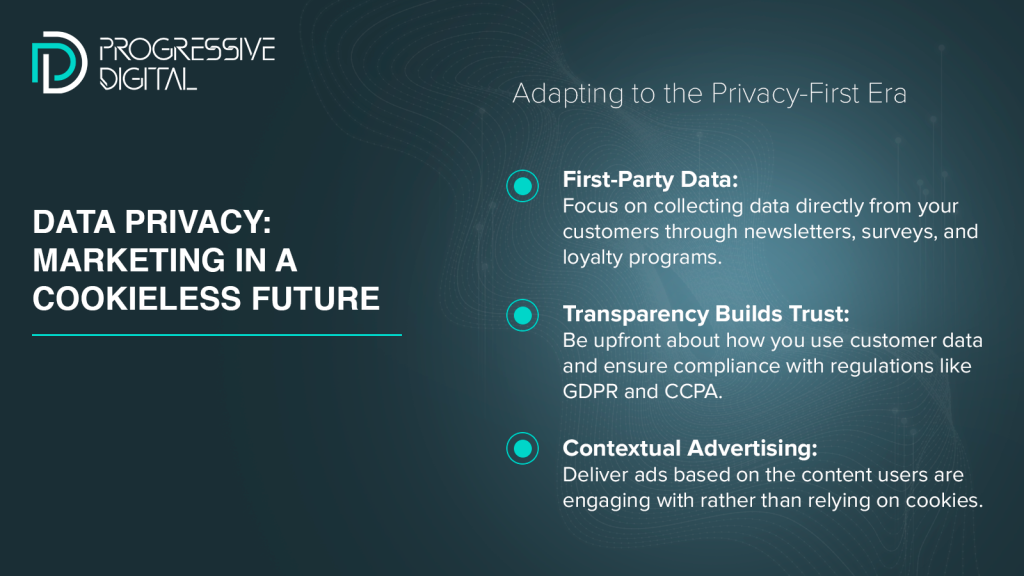
With increasing concerns about data privacy and the phasing out of third-party cookies, marketers need to rethink how they collect and use data.
Adapting to the Privacy-First Era
• First-Party Data: Focus on collecting data directly from your customers through newsletters, surveys, and loyalty programs.
• Transparency Builds Trust: Be upfront about how you use customer data and ensure compliance with regulations like GDPR and CCPA.
• Contextual Advertising: Deliver ads based on the content users are engaging with rather than relying on cookies.
Example: Progressive Digital helps clients implement privacy-first marketing strategies that build trust while driving results.
8. The Metaverse: Beyond the Physical
The metaverse is no longer just a concept; it’s becoming a viable platform for brands to connect with audiences in immersive, virtual environments.
Opportunities in the Metaverse
• Virtual Stores: Create digital spaces where users can browse and purchase products.
• Events and Experiences: Host virtual concerts, product launches, or interactive brand experiences.
• NFTs and Digital Collectibles: Engage your audience with unique, brand-related digital assets.
Pro Tip: Start small by integrating elements of AR or VR into your marketing to test how your audience responds.
9. Focus on Customer Experience
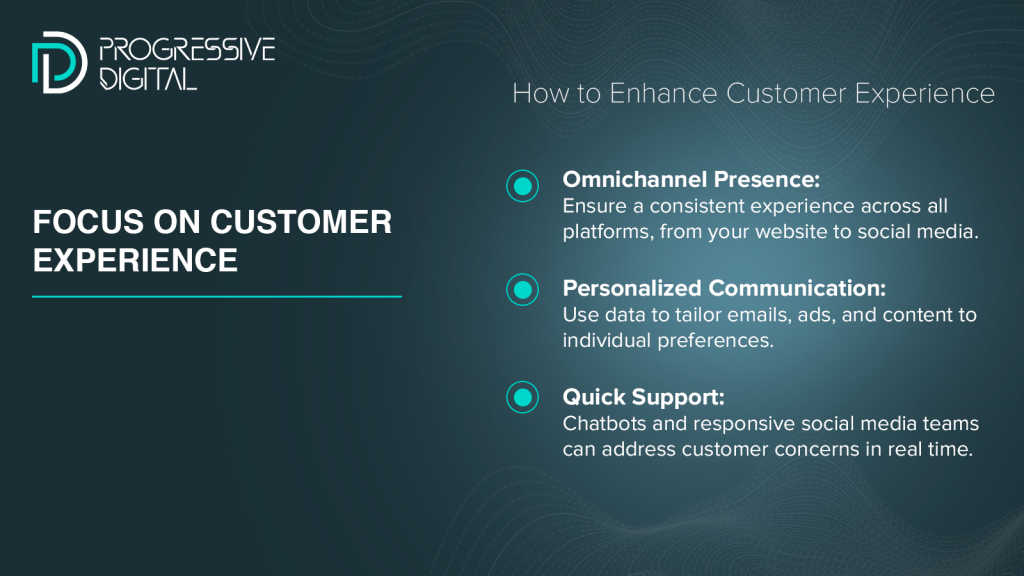
Marketing isn’t just about attracting customers; it’s about keeping them. A seamless, personalized customer experience can make all the difference.
How to Enhance Customer Experience
• Omnichannel Presence: Ensure a consistent experience across all platforms, from your website to social media.
• Personalized Communication: Use data to tailor emails, ads, and content to individual preferences.
• Quick Support: Chatbots and responsive social media teams can address customer concerns in real time.
Embrace Change, Stay Relevant
Marketing isn’t about predicting the future—it’s about creating it. The trends shaping the digital landscape are opportunities for businesses to innovate, connect, and thrive. At Progressive Digital, we’re here to help you navigate these changes and craft strategies that deliver results.
Ready to future-proof your marketing? Let’s create something extraordinary together. Contact Progressive Digital today!