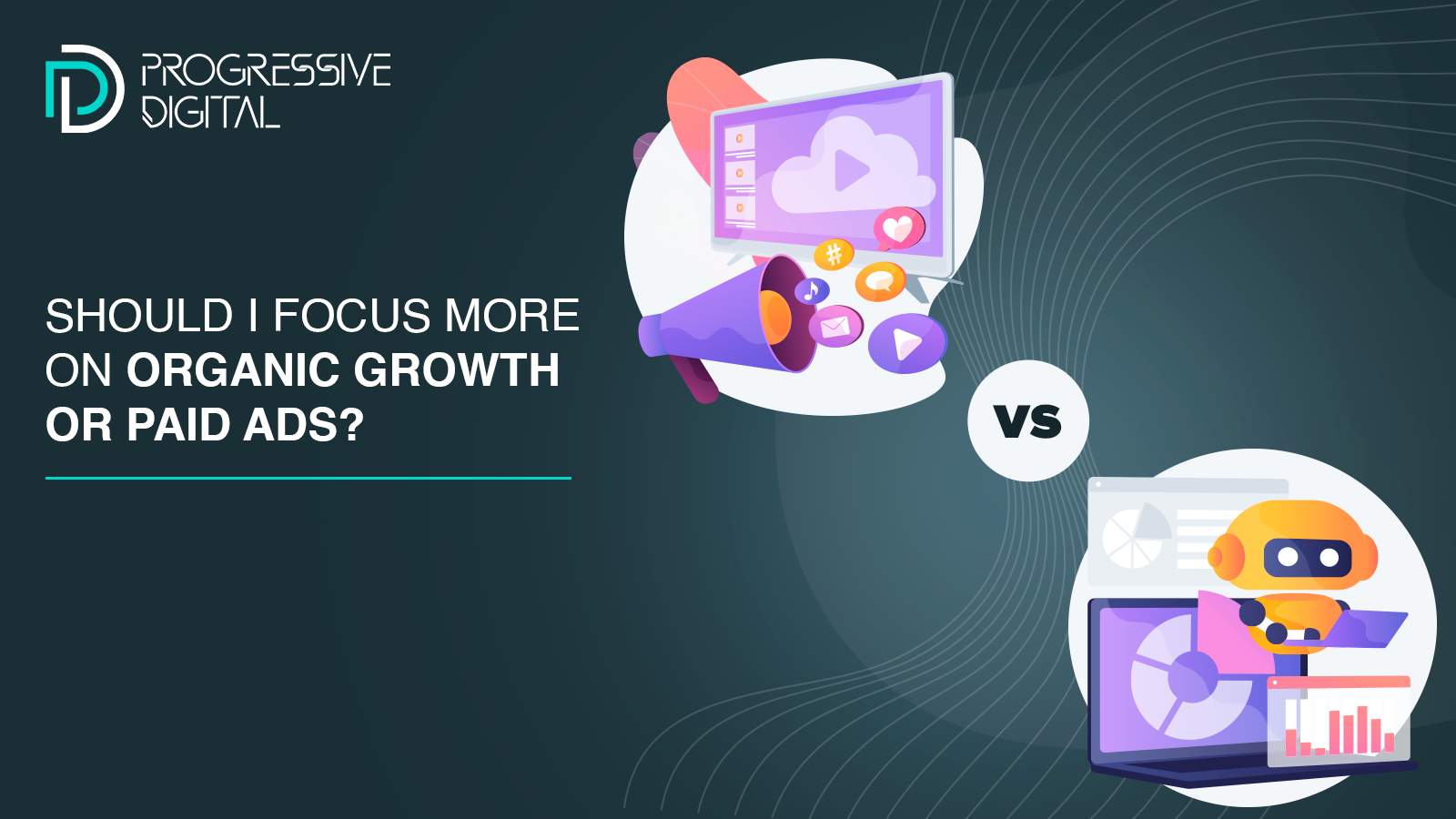
In the digital marketing world, a common question businesses face is whether to focus more on organic growth or paid advertising. Both strategies play crucial roles in an effective marketing plan, but they come with distinct advantages and potential drawbacks. Understanding these can help you make an informed decision about where to invest your marketing efforts. At Progressive Digital, we help businesses navigate this choice to achieve the best results for their unique needs.
Organic Growth: Building a Strong Foundation for Long-Term Success

Organic growth refers to strategies that naturally attract audiences without direct spending on ads. This includes SEO (Search Engine Optimization), content marketing, and building a strong social media presence. Organic growth takes time and consistency but offers lasting benefits for brands.
The Advantages of Organic Growth
1. Long-Term Results: With organic growth, you’re investing in a foundation that builds over time. High-quality content, an optimized website, and consistent social media activity improve your brand’s visibility and ranking on search engines. For example, a blog post optimized for SEO can continue attracting traffic months or even years after it’s published.
2. Cost-Effectiveness: Unlike paid ads, which require continuous funding, organic growth strategies often require an initial investment of time and resources but yield ongoing results. A well-maintained blog or active social media profile will bring in traffic without needing to spend on ads.
3. Credibility and Trust: Organic results are often perceived as more credible by users. A company ranking high in search results due to SEO efforts is likely to be seen as an authority, enhancing trust. For instance, when a customer sees informative blog content or a knowledgeable post on social media, they are more likely to view the brand as a reliable source.
The Challenges of Organic Growth
Despite the benefits, organic growth has its limitations:
• Time-Consuming: Building organic traffic takes patience. It may take months of consistent effort before you start seeing significant results.
• Requires Expertise: Effective SEO and content strategies require specialized knowledge. For example, SEO involves understanding keyword research, optimizing on-page elements, and managing backlinks, which can be complex for beginners.
Paid Ads: Achieving Quick Results with Targeted Campaigns

Paid ads, such as Google Ads and social media advertising, are strategies where businesses pay to get their content or website featured prominently on platforms. Paid ads are often used to achieve quick, measurable results.
The Advantages of Paid Ads
1. Immediate Visibility: One of the most significant benefits of paid ads is instant visibility. Unlike organic methods, which require time to build up, paid ads allow you to place your content directly in front of your target audience immediately. For example, a company launching a new product can use Google Ads to appear at the top of search results as soon as the campaign begins.
2. Precise Targeting: Paid advertising platforms offer advanced targeting options, enabling businesses to reach specific demographics, interests, and locations. For instance, Facebook Ads allow you to target users based on age, gender, location, and even hobbies. This precision can be especially beneficial for businesses with niche products or services.
3. Scalability and Flexibility: Paid ad campaigns can be scaled up or down depending on your budget and business goals. If a particular ad is performing well, you can increase the budget to maximize reach. Conversely, if a campaign is underperforming, adjustments can be made quickly to improve its effectiveness.
The Challenges of Paid Ads
However, paid advertising has its own set of challenges:
• Costs Can Add Up: While paid ads provide immediate results, they require a continuous budget.Once you stop funding a campaign, the traffic stops, unlike organic strategies that continue to pay off over time.
• Ad Fatigue: Users may become desensitized to repetitive ads, particularly on social media. This can lead to lower engagement and, ultimately, wasted spending if ads are not refreshed regularly.
When to Focus on Organic Growth

Organic growth is often ideal for businesses looking to build a strong, lasting online presence. If you’re focused on establishing your brand, improving website authority, or targeting a broad audience over the long term, organic methods can be highly beneficial. For instance, a local business like a restaurant or boutique may benefit from ongoing SEO and social media engagement to build a loyal customer base.
Another scenario where organic growth shines is when targeting customers who seek in-depth information. Content marketing allows you to answer questions, offer valuable insights, and build trust with potential customers. For example, a technology company might use blog posts, tutorials, and case studies to educate and attract customers over time.
When to Invest in Paid Ads
Paid ads are ideal for businesses seeking immediate results or promoting time-sensitive offers. For example, an e-commerce store with a seasonal sale might use Google or Facebook ads to drive traffic quickly and boost conversions during the sale period. Paid ads are also beneficial for businesses looking to reach a specific audience, as they allow for detailed demographic and behavioral targeting.
If you’re launching a new product or service and need rapid visibility, paid advertising can be incredibly effective. For instance, a fitness center opening a new branch could use paid ads to target local customers and generate buzz within a short period.
Finding the Right Balance: A Combined Approach
The truth is, most successful marketing strategies combine both organic growth and paid ads. A blended approach allows you to enjoy the benefits of both methods—immediate visibility and long-term credibility. Here’s how a combined strategy can work:
• Use Paid Ads to Kickstart Organic Efforts: Paid ads can be a great way to drive initial traffic to your website, especially if you’re starting with little organic reach. For example, a new blog post or product page can gain quick exposure through ads, helping build initial engagement that can improve its organic ranking over time.
• Optimize Your Budget by Testing Ads: Run short-term ad campaigns to test different types of content or target audiences. The insights gained can inform your long-term organic content strategy. For example, if a specific ad copy or target demographic performs well, you can tailor your organic content to appeal to similar users.
• Leverage Retargeting: Paid ads also allow for retargeting, where you reach users who have already interacted with your website or content. This can complement organic growth efforts by bringing interested users back to your site, increasing the chances of conversion.
Organic Growth or Paid Ads?
The decision to focus on organic growth or paid ads ultimately depends on your business goals, budget, and timeline. For sustained, long-term results, organic growth is invaluable, building trust and credibility over time. For quick wins and targeted campaigns, paid ads provide immediate reach and precision.
At Progressive Digital, we specialize in helping businesses find the right balance between organic growth and paid ads. Our team of experts can develop a customized strategy that aligns with your objectives and ensures you get the best of both worlds. Contact us today to learn how we can help your business grow efficiently and effectively.