

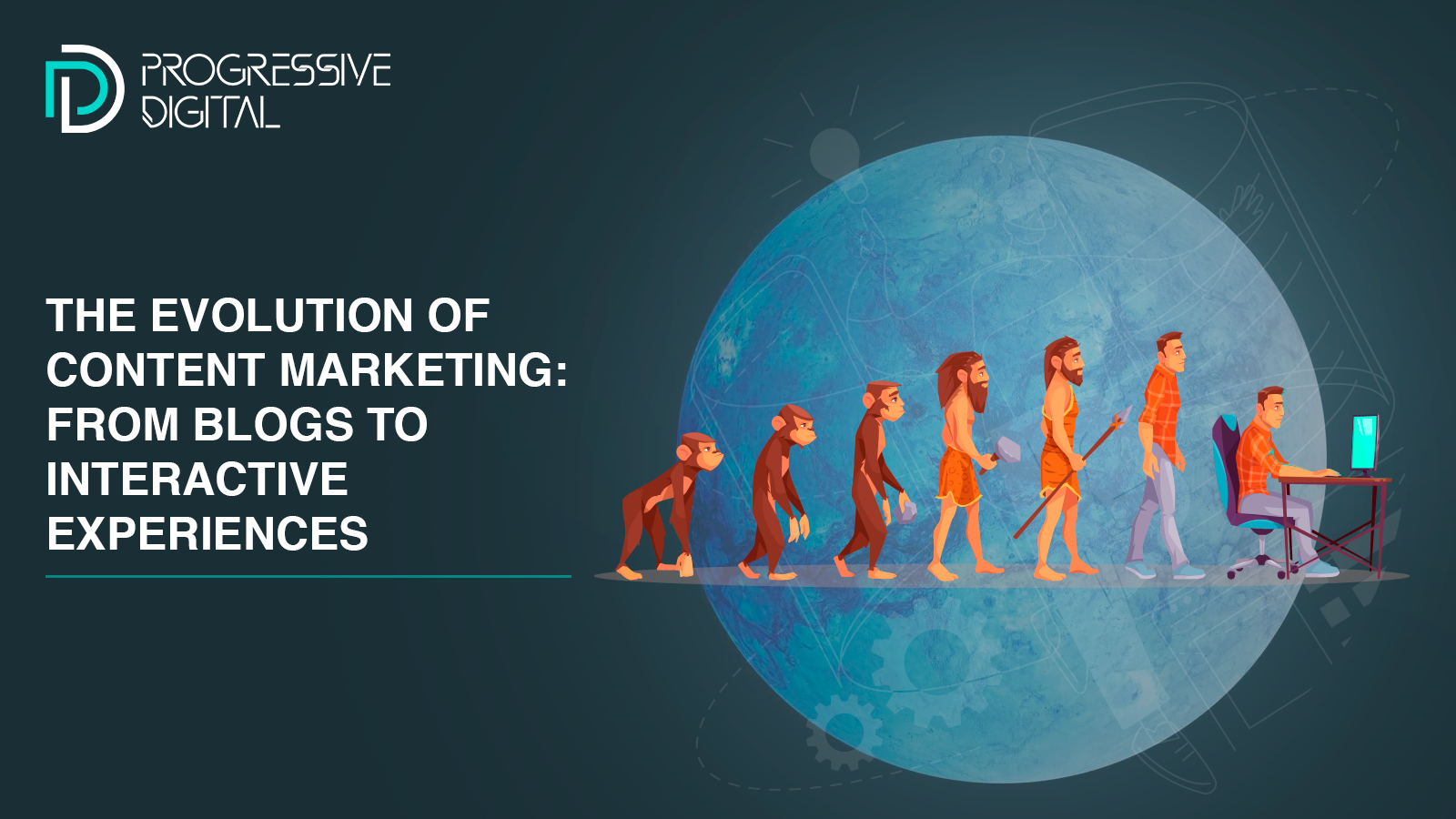
Content marketing has come a long way from the early days of simple blog posts. What started as a strategy to inform and engage audiences through written content has transformed into a dynamic, multi-format ecosystem designed to capture attention, drive conversions, and foster brand loyalty.
At Progressive Digital, we’ve seen firsthand how content marketing continues to evolve, shifting from passive consumption to interactive, immersive experiences that demand audience engagement. Let’s explore how content marketing has transformed over the years and where it’s headed next.
1. The Blogging Boom: The Foundation of Content Marketing
In the early 2000s, blogs dominated the content marketing space. Businesses realized they could attract customers by providing valuable, SEO-optimized content that addressed common questions, industry insights, and problem-solving solutions.
Why it worked:
• Improved search engine rankings
• Established brands as thought leaders
• Provided consistent, evergreen content
Even today, blogging remains an essential pillar of content marketing, but the way we create and consume content has dramatically changed.
2. The Rise of Video Content: Engaging Audiences Visually
As internet speeds increased and social media gained traction, video content quickly became the preferred format for many audiences. Platforms like YouTube, Facebook, and Instagram made video content more accessible, and businesses saw the potential for higher engagement rates and emotional connection.
Why video became a game-changer:
• Short attention spans required more engaging content
• Social media algorithms favored video over text-based posts
• Live streaming and behind-the-scenes content fostered authenticity
Brands that leveraged video storytelling gained a competitive edge, and today, short-form videos (like TikTok and Instagram Reels) continue to dominate digital marketing strategies.
3. Social Media and the Demand for Bite-Sized Content
With platforms like Twitter (now X), Instagram, and LinkedIn driving content marketing, brands had to adapt to a new way of storytelling—one that fit into 140 characters, a 15-second video, or a single compelling image.
What changed?
• Short-form content became king
• User-generated content (UGC) gained trust
• Brands needed to be more interactive and responsive
Social media forced brands to focus on concise, attention-grabbing messaging, leading to the rise of infographics, memes, and micro-content strategies.
4. Personalization & AI-Driven Content: The Data Revolution
As content marketing matured, businesses started leveraging AI and big data to personalize the user experience. Today, consumers expect content tailored to their interests, behaviors, and preferences.
How AI changed content marketing:
• Dynamic email campaigns that adapt to user behavior
• Chatbots & AI-driven recommendations for a seamless experience
• Personalized blog content & product suggestions
Brands that integrate AI-driven content marketing strategies see higher engagement and conversion rates by making customers feel truly understood.
5. The Shift to Interactive Content: Engagement is Everything
The next era of content marketing isn’t just about consumption—it’s about participation. Today’s users want content that engages, educates, and entertains all at once.
Types of interactive content shaping the future:
• Quizzes & Polls – Engaging users while collecting valuable data
• Augmented Reality (AR) & Virtual Reality (VR) – Immersive brand experiences
• Shoppable Content – Seamless product discovery and purchase integration
• Interactive Infographics & Reports – Data visualization that’s engaging, not static
By focusing on engagement rather than passive consumption, brands are creating memorable customer experiences that drive action.
Where is Content Marketing Headed Next?
Looking ahead, content marketing will continue evolving into a more immersive, AI-powered, and interactive landscape.
• Voice Search & Smart Assistants: Content optimized for voice search will dominate as more users rely on Alexa, Google Assistant, and Siri.
• Metaverse Marketing: Brands will experiment with virtual spaces, NFTs, and digital experiences to create deeper customer engagement.
• Hyper-Personalization: AI will refine marketing strategies, offering one-to-one experiences rather than broad audience targeting.
At Progressive Digital, we believe the future of content marketing is about creating experiences, not just content. The brands that adapt, innovate, and engage will be the ones that thrive in the next digital era.
Is your content strategy keeping up with the evolution? Let’s create a digital experience that keeps your audience coming back for more!