


When investing in digital advertising, understanding your return on investment (ROI) is crucial. ROI isn’t just about knowing whether your ads are generating clicks or impressions—it’s about determining whether your advertising efforts are driving real business growth. For businesses of all sizes, accurately tracking ROI ensures smarter decision-making, better budget allocation, and ultimately, more effective campaigns.
At Progressive Digital, we specialize in helping businesses maximize their ROI from digital advertising by leveraging the right tools, strategies, and insights. In this guide, we’ll explore the best ways to track ROI from digital ads, the key metrics to watch, and actionable tips to improve your campaign performance.
Why Is ROI Tracking Important?
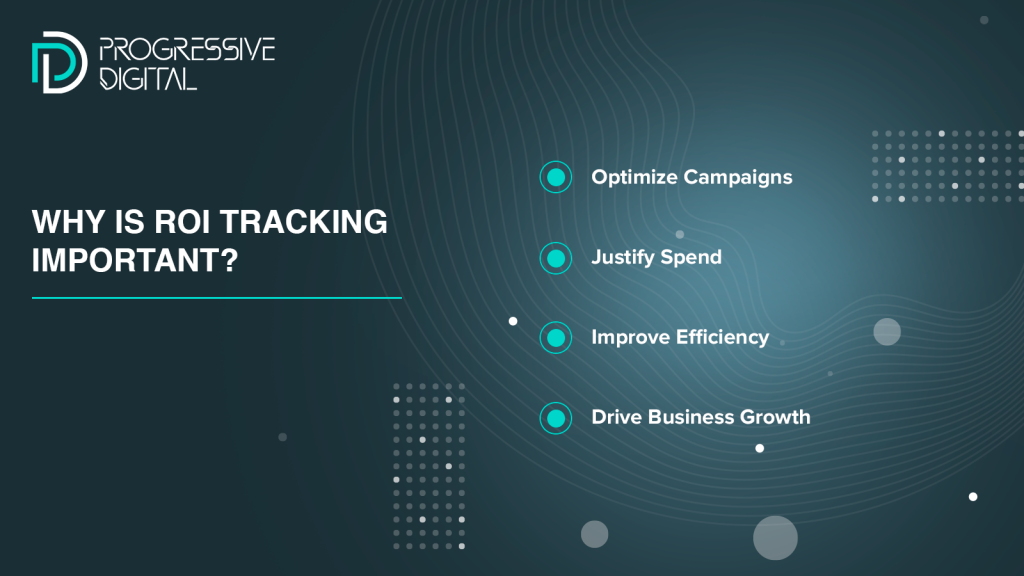
ROI is the ultimate measure of your campaign’s success. It answers a fundamental question: Are the profits from my ad spend exceeding the costs? Without tracking ROI, you’re essentially flying blind, unable to determine what’s working and what needs improvement.
Key Benefits of Tracking ROI:
• Optimize Campaigns: Identifies which ads, platforms, and strategies are delivering the most value.
• Justify Spend: Demonstrates the effectiveness of your budget allocation to stakeholders.
• Improve Efficiency: Reduces wasted spend by focusing on high-performing channels.
• Drive Business Growth: Ensures your ads are generating leads, conversions, and revenue.
How to Calculate ROI from Digital Ads

The basic formula for ROI is:
ROI = [(Revenue from Ads – Cost of Ads) ÷ Cost of Ads] × 100
This calculation gives you a percentage that indicates the profitability of your campaign. For example, if you spend $1,000 on ads and generate $5,000 in revenue, your ROI is 400%.
However, calculating ROI isn’t always straightforward, especially if your sales process is complex or involves multiple touchpoints. That’s why using the right tracking tools and methods is essential.
The Best Ways to Track ROI from Digital Ads

Here are the most effective methods for tracking ROI, along with actionable insights to improve your approach.
1. Use Analytics Tools
Platforms like Google Analytics, Facebook Ads Manager, and other ad tracking tools are indispensable for understanding your ad performance. These tools allow you to track clicks, conversions, revenue, and other metrics tied to your campaigns.
How to Use Analytics Effectively:
• Set Up Conversion Tracking: Ensure your analytics tools are tracking key actions like purchases, form submissions, or downloads.
• Track Multi-Channel Funnels: Use Google Analytics’ Multi-Channel Funnels report to see how different channels contribute to conversions.
• Monitor Key Metrics: Focus on click-through rate (CTR), cost per click (CPC), conversion rate, and cost per acquisition (CPA).
Pro Tip: Use UTM parameters to track the performance of specific campaigns, ads, or channels within your analytics tools.
2. Implement Pixel Tracking
Pixel tracking involves placing a small piece of code on your website that tracks user behavior. Facebook Pixel and Google Ads Conversion Tracking are popular examples.
Benefits of Pixel Tracking:
• Tracks users’ actions after they click on your ad.
• Helps you measure conversions, like sales or leads.
• Enables retargeting campaigns to re-engage users who didn’t convert initially.
Example: A retail business can use Facebook Pixel to track which products users add to their cart but don’t purchase, then serve those users retargeting ads to drive them back to the site.
3. Leverage CRM Integration
For businesses with longer sales cycles, integrating your digital ads with a customer relationship management (CRM) system is essential. A CRM tracks leads generated from ads and helps connect those leads to actual sales.
How CRM Integration Works:
• Tracks the entire customer journey, from ad click to purchase.
• Links ad campaigns to specific sales opportunities.
• Helps you calculate the true ROI of your campaigns, especially for B2B businesses.
Pro Tip: Use tools like HubSpot or Salesforce to integrate your CRM with platforms like Google Ads or LinkedIn Ads for seamless tracking.
4. Track Revenue Attribution
Revenue attribution ensures that you’re accurately assigning credit to the ads and channels that drove revenue. There are several attribution models to choose from, each with its own strengths.
Common Attribution Models:
• Last-Click Attribution: Gives 100% credit to the last click before a conversion.
• First-Click Attribution: Gives 100% credit to the first interaction.
• Multi-Touch Attribution: Distributes credit across multiple touchpoints in the customer journey.
Why It Matters: Multi-touch attribution provides a more holistic view of how your ads are influencing customer behavior, especially for businesses with multiple marketing channels.
5. Measure Lifetime Value (LTV)
For businesses with repeat customers, focusing solely on immediate conversions may undervalue the ROI of your ads. Measuring the Lifetime Value (LTV) of customers helps you understand the long-term revenue generated by your campaigns.
How to Calculate LTV:
1. Determine the average purchase value (total revenue ÷ number of purchases).
2. Multiply by the average number of purchases per customer.
3. Factor in customer retention rates if applicable.
Pro Tip: Combine LTV with customer acquisition cost (CAC) to determine the true profitability of your ads.
Key Metrics to Track ROI
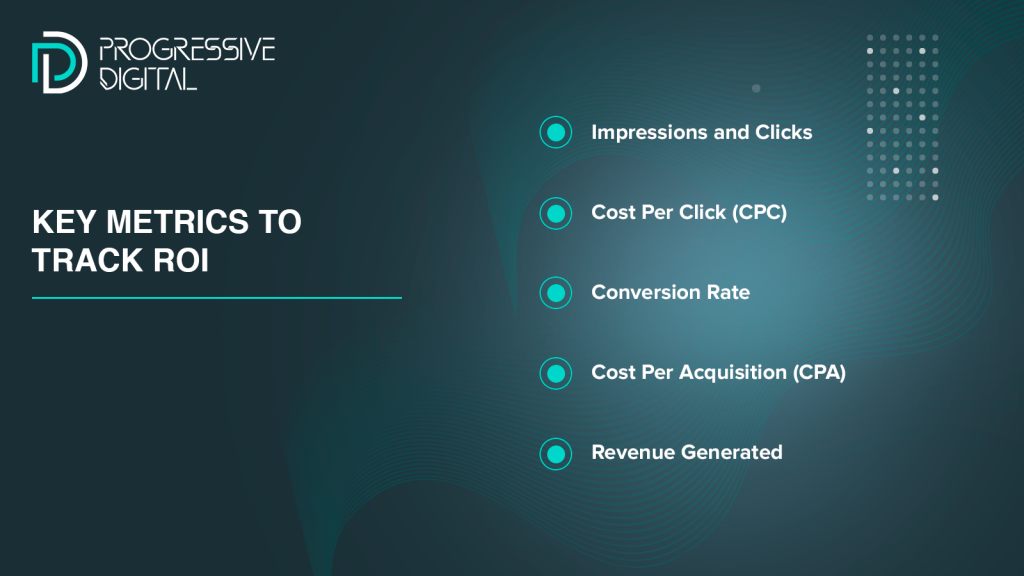
Understanding ROI requires monitoring the right metrics at every stage of the customer journey.
1. Impressions and Clicks
These metrics indicate how well your ads are capturing attention and driving traffic to your website.
2. Cost Per Click (CPC)
CPC measures how much you’re paying for each click on your ad. Lower CPC generally means higher ROI, provided the clicks are converting.
3. Conversion Rate
Conversion rate measures the percentage of users who take a desired action, such as making a purchase or filling out a form.
4. Cost Per Acquisition (CPA)
CPA tells you how much you’re spending to acquire a single customer. Comparing CPA to your average revenue per customer helps you assess profitability.
5. Revenue Generated
Tracking revenue directly tied to your ads is the most critical metric for calculating ROI.
Tips to Improve ROI from Digital Ads
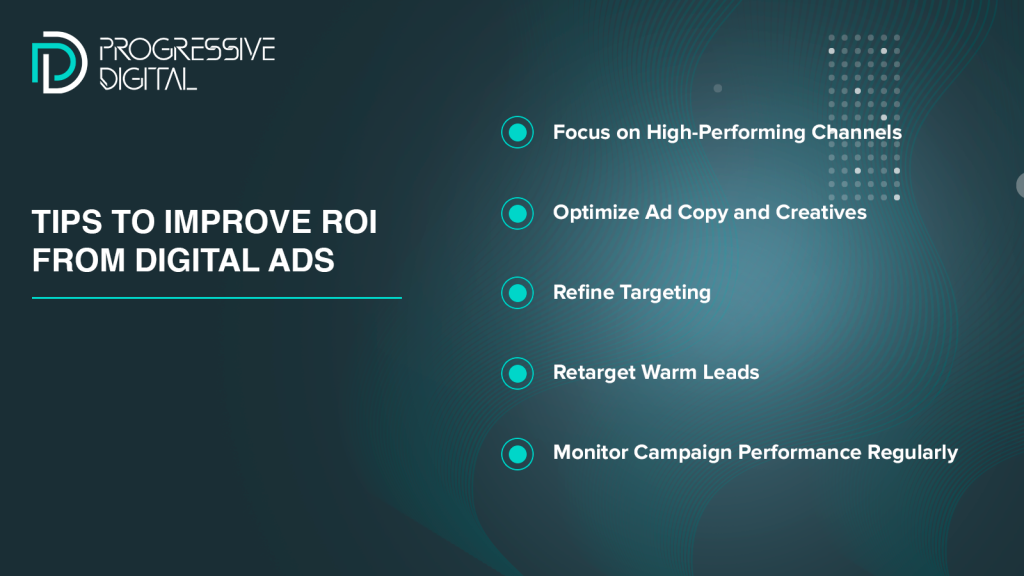
Tracking ROI is only half the battle—improving it requires ongoing optimization.
1. Focus on High-Performing Channels
Identify which platforms are delivering the best results and allocate more budget to those channels.
2. Optimize Ad Copy and Creatives
A/B test different headlines, visuals, and calls to action to see what resonates most with your audience.
3. Refine Targeting
Use audience segmentation to ensure your ads are reaching the most relevant users.
4. Retarget Warm Leads
Leverage retargeting campaigns to convert users who’ve already interacted with your website or ads.
5. Monitor Campaign Performance Regularly
Set up weekly or monthly performance reviews to identify trends and adjust strategies accordingly.
How Progressive Digital Can Help
At Progressive Digital, we understand that tracking and improving ROI can be challenging without the right expertise. That’s why we provide:
• Custom Campaign Tracking: We implement advanced tracking tools tailored to your business needs.
• Data-Driven Insights: Our team analyzes your campaigns to uncover actionable insights.
• Ongoing Optimization: We continuously refine your ads to maximize performance and ROI.
• Transparent Reporting: You’ll always know how your campaigns are performing with detailed, easy-to-understand reports.
Tracking ROI from digital ads isn’t just about crunching numbers—it’s about gaining a deeper understanding of how your advertising efforts impact your business’s growth. By using tools like analytics platforms, pixel tracking, CRM integration, and revenue attribution models, you can accurately measure your campaigns’ success and make data-driven decisions to improve performance.
At Progressive Digital, we help businesses like yours navigate the complexities of ROI tracking and campaign optimization. Ready to take your digital advertising to the next level? Contact us today to see how we can help you achieve measurable success.