
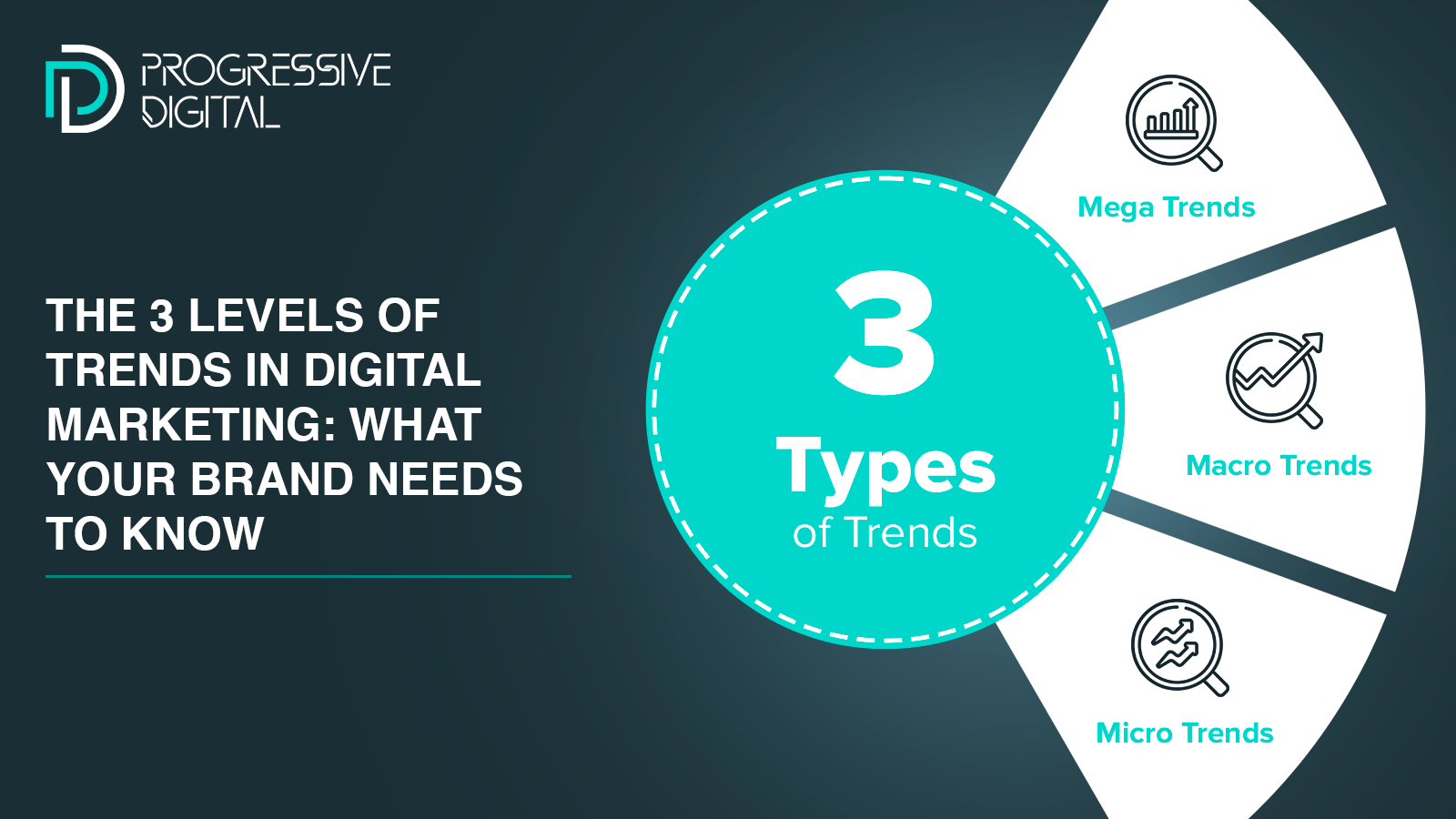
In the ever-changing world of digital marketing, trends come and go at an astonishing pace. Some last for years, reshaping industries, while others fizzle out as quickly as they emerge. The key to staying ahead isn’t just following trends—it’s understanding their levels and impact.
At Progressive Digital, we analyze trends at three different levels to help businesses make smarter marketing decisions. Whether it’s a fleeting viral sensation or a long-term industry shift, knowing where a trend falls on the spectrum helps brands determine where to invest their time and resources.
So, what are the three levels of trends in digital marketing? Let’s break them down.
1. Micro Trends: The Short-Lived Hype (Weeks to Months)

Micro trends are fast-moving, attention-grabbing shifts that dominate social media and pop culture for a brief period. They often start as viral moments, creating massive engagement in a short time, but they rarely have lasting influence.
Examples of Micro Trends in Digital Marketing:
- TikTok & Instagram Challenges – Dance trends, hashtag challenges, and trending audio clips gain traction quickly but fade within weeks.
- Meme Marketing – A viral meme format emerges, brands jump on it, and within a month, it’s outdated.
- Short-Lived Hashtags – Hashtags that gain momentum for specific events or social movements but lose relevance once the hype dies down.
Should You Invest in Micro Trends?
–Yes, if you’re looking for fast engagement. Micro trends work best for brands that can react quickly with creative, real-time content.
–No, if you want long-term ROI. These trends burn out fast, so they should complement, not dominate, your marketing strategy.
Pro Tip: Brands that excel in micro trends capitalize on them quickly. If a viral challenge aligns with your brand, jump in fast and make it your own before it disappears.
2. Macro Trends: The Shifts That Last (Months to Years)

Macro trends are more than just viral moments—they represent emerging shifts in digital behavior, technology, and consumer expectations. They may start as micro trends, but they gain traction and become standard marketing practices.
Examples of Macro Trends in Digital Marketing:
- Short-Form Video Domination – TikTok, Instagram Reels, and YouTube Shorts are no longer just a trend—they’ve become a core part of social media marketing.
- User-Generated Content (UGC) & Influencer Marketing – More brands are relying on creators and everyday users to build trust and authenticity.
- AI-Powered Content Creation – AI-driven tools like ChatGPT, MidJourney, and automation platforms are redefining content marketing.
- Personalization & First-Party Data – With privacy updates and the decline of third-party cookies, brands are investing in personalized marketing strategies.
Should You Invest in Macro Trends?
–Yes, if you want sustained growth. Macro trends shape consumer expectations and are worth integrating into your marketing strategy.
–No, if you’re looking for immediate virality. These trends take time to develop, but they create lasting brand impact.
Pro Tip: Early adoption of macro trends can put your brand ahead of the competition. Watch industry leaders and test new platforms before they become mainstream.
3. Mega Trends: The Industry Game-Changers (Years to Decades)

Mega trends are fundamental shifts that redefine how digital marketing works. These aren’t just “trends” in the traditional sense—they’re long-term movements that shape the industry for years.
Examples of Mega Trends in Digital Marketing:
- The Rise of AI & Automation – AI isn’t just a tool—it’s reshaping content creation, analytics, and customer interactions.
- Voice Search & Conversational Marketing – With the rise of Alexa, Google Assistant, and Siri, brands are optimizing for voice-based search queries.
- The Metaverse & Virtual Commerce – Augmented Reality (AR), Virtual Reality (VR), and digital storefronts are changing how brands engage with consumers.
- Privacy & Data Protection – Stricter regulations like GDPR and Apple’s privacy updates are pushing brands to rethink their data collection strategies.
Should You Invest in Mega Trends?
–Yes, if you want long-term success. Brands that align with mega trends early establish themselves as industry leaders.
-No, if you lack the resources for long-term implementation. Mega trends require time, investment, and strategic adaptation.
Pro Tip: If you’re not adapting to mega trends, you risk falling behind competitors who are shaping the future. Start by integrating small changes and scale up as the trend solidifies.
How to Leverage Trends at Every Level
Not every trend is worth chasing. The best digital marketing strategies balance micro, macro, and mega trends to create a scalable and sustainable approach.
Micro Trends – “Be Agile”
• Monitor viral content daily.
• Create reactive content quickly.
• Use trends to boost engagement, not drive strategy.
Macro Trends – “Be Proactive”
• Test emerging platforms and formats.
• Invest in strategies that show long-term potential.
• Analyze competitors to see how they’re adopting these trends.
Mega Trends – “Be Strategic”
• Adapt business models and processes for long-term shifts.
• Invest in AI, automation, and data-driven marketing.
• Future-proof your brand by aligning with industry evolution.
Are You Keeping Up?
The digital marketing landscape is constantly evolving, and staying ahead requires understanding the different levels of trends. Brands that react to micro trends for engagement, invest in macro trends for growth, and align with mega trends for longevity will build a strong, future-proof strategy.
At Progressive Digital, we help businesses navigate the fast-changing digital world with strategies that are not just trendy—but effective.
Want to create a marketing strategy that lasts? Let’s make your brand future-ready today.